
16 Dec Foods That May Delay the Onset of Menopause
Foods That May Delay the Onset of Menopause
by Ashleigh Feltham, Accredited Practising Dietitian and Accredited Nutritionist.
Every woman will move into menopause during her lifetime. It is a process of healthy ageing, not a diseased state or something to be feared. Perimenopause and menopause can be considered the second phase of a woman’s life. This stage brings about both physiological and psychological changes.
Perimenopause is the transition into menopause. It is a natural process of around five to ten years before menopause. Menopause is a one-time moment: the twelve-month anniversary of your last period.
Most women begin perimenopause in their forties and may start to experience symptoms like hot sweats and flushes around their late forties. Typically, symptoms are due to changing hormone levels, which include oestrogen, progesterone and testosterone.
There are potential health benefits of a later onset of menopause. These include a reduced risk of certain hormone-related cancers, such as breast and uterine cancer. A later onset of menopause is also linked to a longer lifespan due to the protective effects of sex hormones on your heart and bones. A recent study of 14,000 women aged 40-65 in the UK found surprising links between the diet of women and when menopause begins1.
The Good
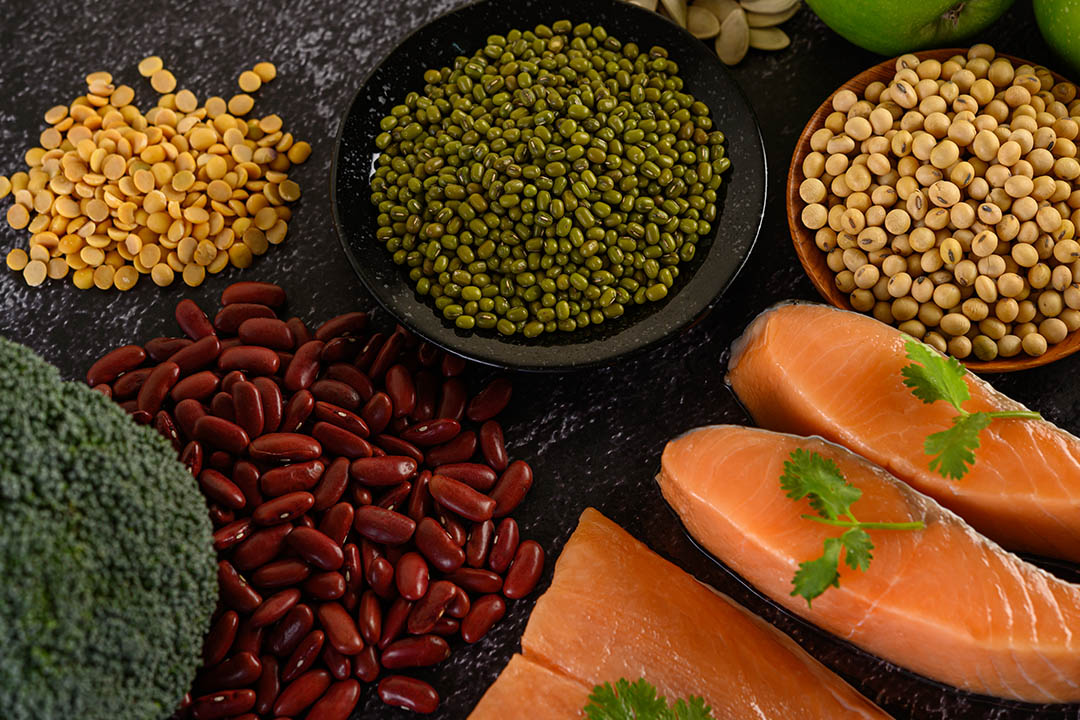
The two foods that slowed the onset of menopause were oily fish and legumes. Oily fish includes sardines, mackerel, herring and salmon. Legumes include lentils and chickpeas.
The reason these foods may help to slow the onset of menopause is their antioxidant properties. These antioxidants help to slow the rate of follicular atresia, or the natural loss of your egg follicles over your lifetime.
In other words, more antioxidants in your diet lead to greater protection of your ovaries and as a result may delay the onset of menopause.
The Bad
Foods found to potentially speed up the onset of menopause were refined carbohydrates. This included foods like white pasta and white rice.
The reason behind this could be that these foods have a higher glycaemic index and spike your blood sugar levels. This over time can be a risk factor of increasing your insulin resistance.
Insulin resistance can lower your levels of sex hormone-binding globulin (SHBG). SHBG may affect your oestrogen balance and speed up the depletion of your ovarian follicles.
Take a Holistic Approach
While single foods have been identified to potentially have a positive or negative impact on the rate you begin perimenopause it is important to remember that no one single food can delay the onset of menopause.
This research does reinforce the deep connection between your gut, your diet choices and your hormones. This is especially true during the life phases of perimenopause and menopause.
Some proactive lifestyle additions you can add into your diet today could be:
- Including one hundred grams of cooked oily fish two to three times a week.
- Adding in more legumes and beans. Legumes and beans are great in a salad or as part of a sauce. They can replace part of the meat in a taco beef mince or spaghetti bolognaise sauce.
- Add more fibre from produce, wholegrains, nuts and seeds.
- Add soy products to your diet like miso, tempeh, edamame, soybeans and soy milk. Two serves a day are recommended.
These foods support the health of your gut which in turn support the health of your hormones.
References:
- Dunneram Y, Greenwood DC, Burley VJ, Cade JE. Dietary intake and age at natural menopause: results from the UK Women’s Cohort Study. J Epidemiol Community Health. 2018 Aug;72(8):733-740. doi: 10.1136/jech-2017-209887. Epub 2018 Apr 30. PMID: 29712719; PMCID: PMC6204950.
- Sun Y, Liu B, Snetselaar LG, Wallace RB, Shadyab AH, Kroenke CH, Haring B, Howard BV, Shikany JM, Valdiviezo C, Bao W. Association of Major Dietary Protein Sources With All-Cause and Cause-Specific Mortality: Prospective Cohort Study. J Am Heart Assoc. 2021 Feb;10(5):e015553. doi: 10.1161/JAHA.119.015553. Epub 2021 Feb 24. PMID: 33624505; PMCID: PMC8174240.
- Zhang L, Zhao L, Xiao X, Zhang X, He L, Zhang Q. Association of dietary carbohydrate and fiber ratio with postmenopausal bone mineral density and prevalence of osteoporosis: A cross-sectional study. PLoS One. 2024 Feb 14;19(2):e0297332. doi: 10.1371/journal.pone.0297332. PMID: 38354209; PMCID: PMC10866481.
- Moore, Sam R. MS1,2; Cabre, Hannah E. PhD1,2; Smith-Ryan, Abbie E. PhD1,2. Body composition, physical activity, and menopause symptoms: how do they relate? Menopause 31(4):p 336-341, April 2024. | DOI: 10.1097/GME.0000000000002334.
- Episode 41 – Perimenopause and menopause: Can nutrition (and nuts) help? Nuts for Life.